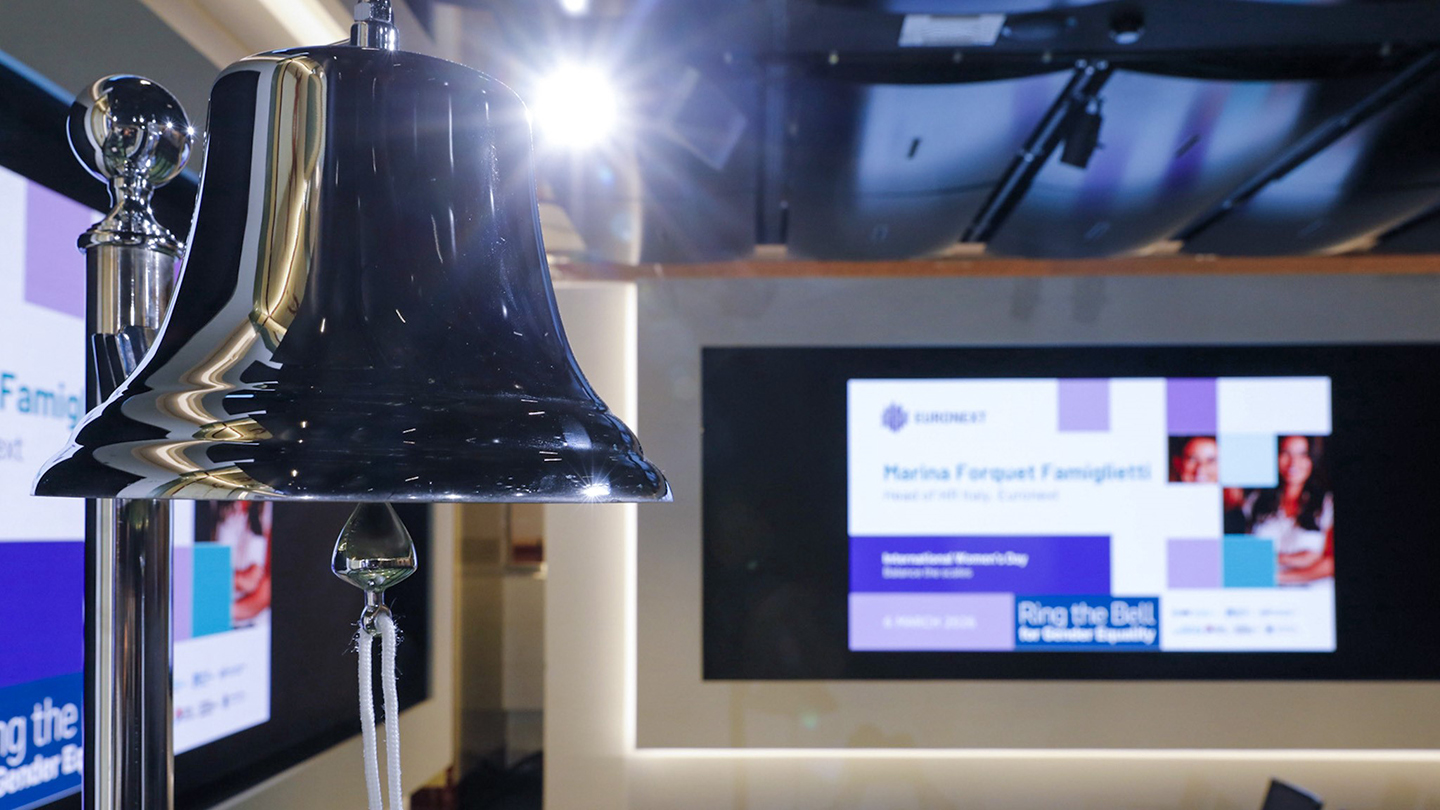
The Italian private sector strengthens its commitment to gender equality, but the gap in the world of work remains a structural challenge that requires concrete acceleration: this is the message launched by UN Global Compact Network Italy during the "Ring the Bell for Gender Equality" event, the international campaign celebrating International Women's Day 2026.
The ceremony aims to dedicate the opening of the financial markets to the reduction of gender gaps and is part of a global initiative that involves over one hundred stock exchanges around the world: in Italy, it is organized every year by Borsa Italiana (Gruppo Euronext) and Women in ETFs and promoted by UNGCN Italia.
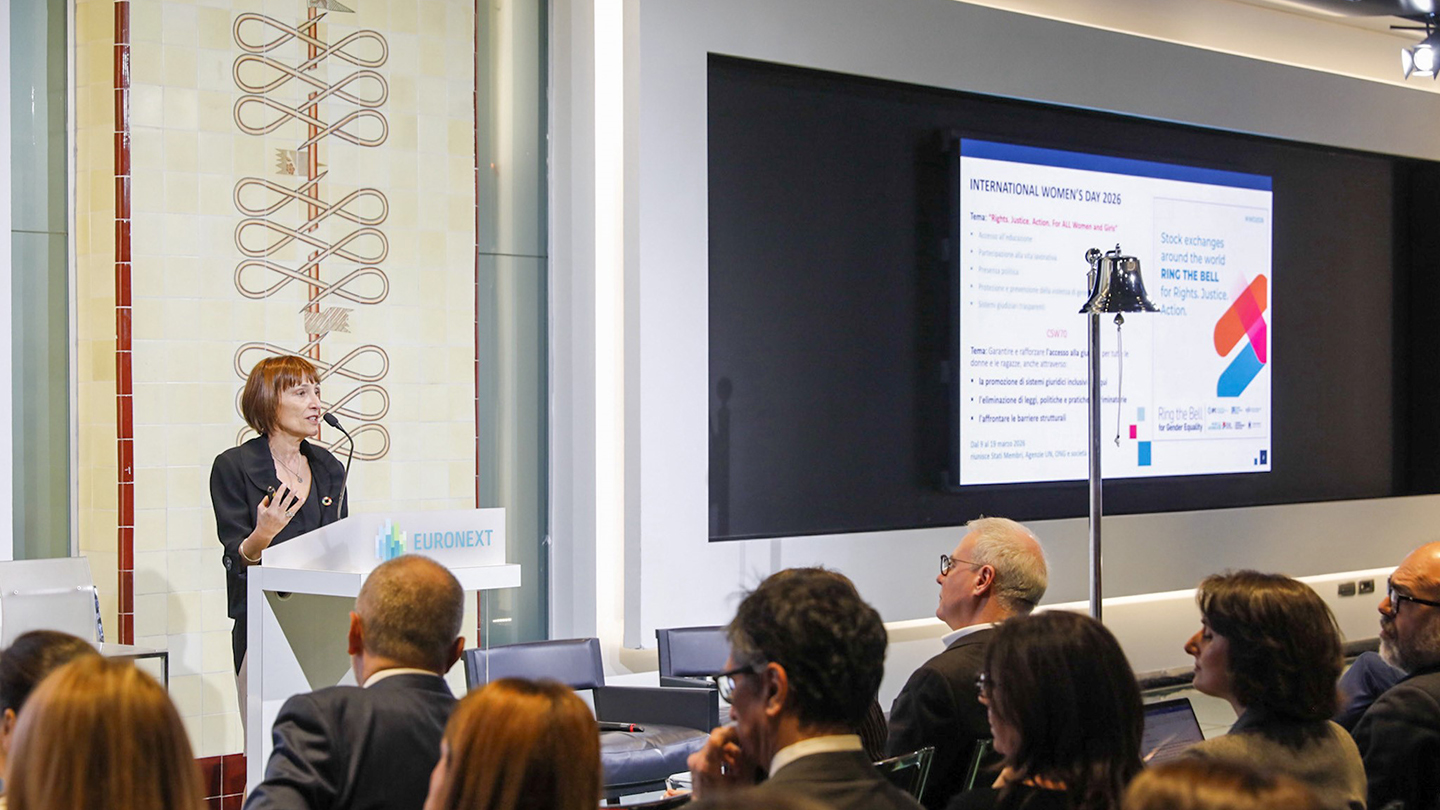
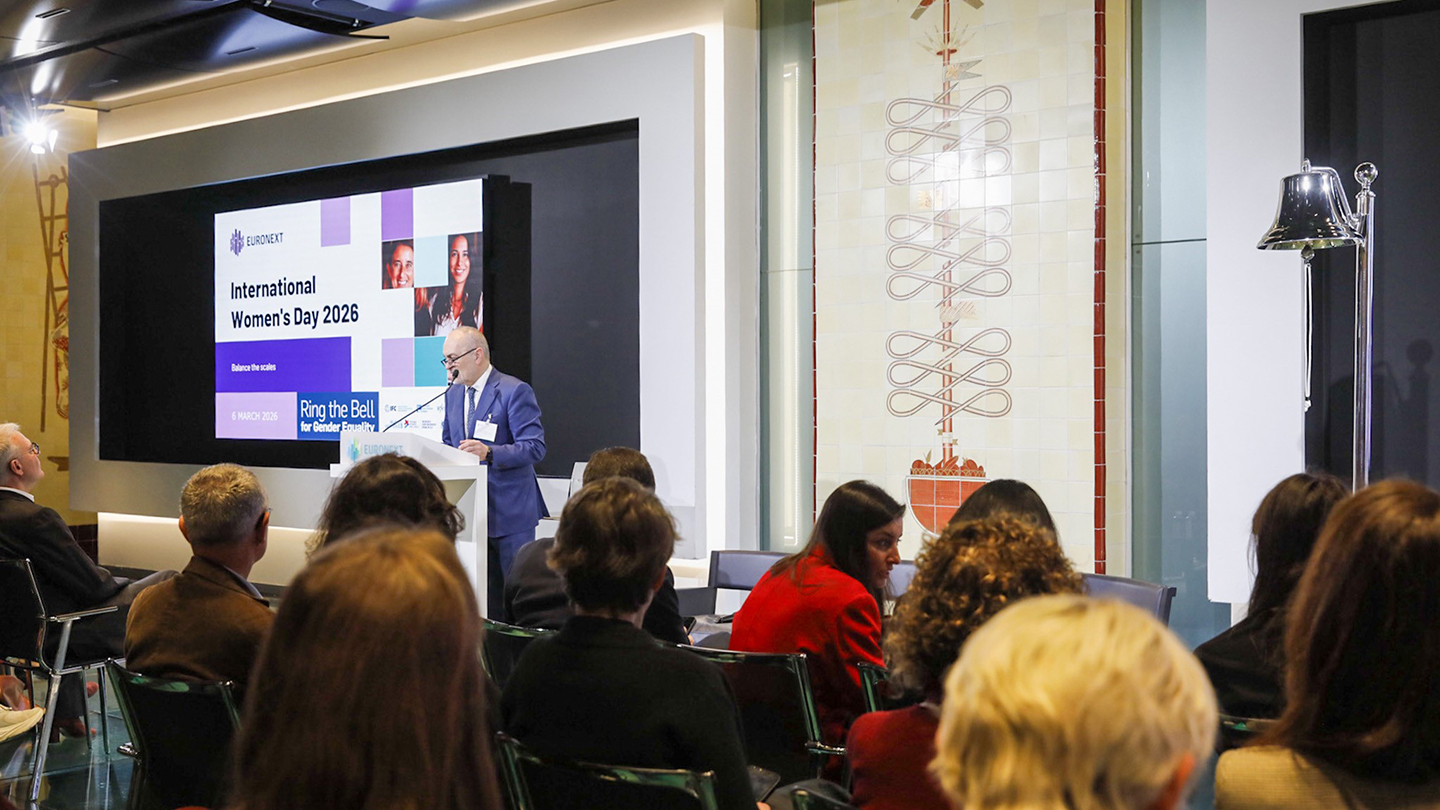
The event took place on Friday 6 March, at the Borsa headquarters in Milan, and involved: the CEO of Borsa Italiana, Fabrizio Testa, the President and the Executive Director of UNGCN Italia, Filippo Bettini and Daniela Bernacchi, the Head of HR Italy of Euronext, Marina Forquet Famiglietti, the Head of Investments and Investment Products of the Bper Group, Grazia Orlandini, and the Chief Financial Officer of Edison SpA, Ronan Lory.
The gender gap is a structural issue
Despite recorded progress and strengths, however, the gender gap still remains structural: according to the Global Gender Gap Report 2025 of the World Economic Forum, in fact, the global gender gap is only 68.8% filled and at the current rate it will take around 123 years at a global level to achieve full equality.
In the Gender Equality Index 2024 of the European Institute for Gender Equality (EIGE), Italy obtained 61.9 points out of 100, ranking 12th in the European Union and improving by 9.4 points compared to 2015. However, critical issues remain in the area of work, where Italy ranks in last place, confirming the employment and economic dimension as the main area of intervention.
The Italian private sector's commitment to gender equality is higher than the European average
Despite a still complex and critical global situation, encouraging news comes from the companies of the Italian Network, as confirmed by the results of the mandatory annual reporting (Communication on Progress 2025) through which member companies communicate the progress made in the field of sustainability.
From the data it emerges that:
- 25% of large companies and 35% of SMEs record a female presence in leadership positions, compared to a European average of 28% and 31%
- on a policy level, 96% of large companies and 75% of SMEs have adopted policies on women's rights and gender equality, compared to a European average of 91% and 76% at European level
In this context, however, the concrete action of Directive (EU) 2023/970 applies. It will enter into force in June 2026 and will strengthen the principle of equal pay through pay transparency requirements, both at the hiring stage and throughout the employment relationship, providing for corrective measures in cases where the gap exceeds 5%. This is particularly important given the data showing pay gaps still exceeding 25% in some roles, as reported in the third gender report of the Steering and Supervisory Council (Civ) of the INPS.
The United Nations Global Compact's concrete support for businesses on these issues
In this context, the UN Global Compact is at the forefront of providing companies with the knowledge and skills needed to increase the impact of SDG 5 of the 2030 Agenda. These include the Women's Empowerment Principles (WEPs), seven principles promoted with UN Women and inspired by real business practices, aimed at promoting equal opportunities for women in the workplace, and the Target Gender Equality program, which supports companies in implementing their commitment to gender equality through concrete actions.
The program's performance monitoring tool shows that, globally, only 6% of companies can be considered "leaders" in gender equality, while the majority are still in the early stages of their journey. Participating Italian companies show overall solid performance, outperforming the European average:
- 95% integrate gender equality into their policies and recruitment processes (87% at the European level)
- 87% adopt an approach aimed at ensuring equal pay (79% at the European level)
- 53% promote improved gender performance throughout the supply chain (57% at the European level).