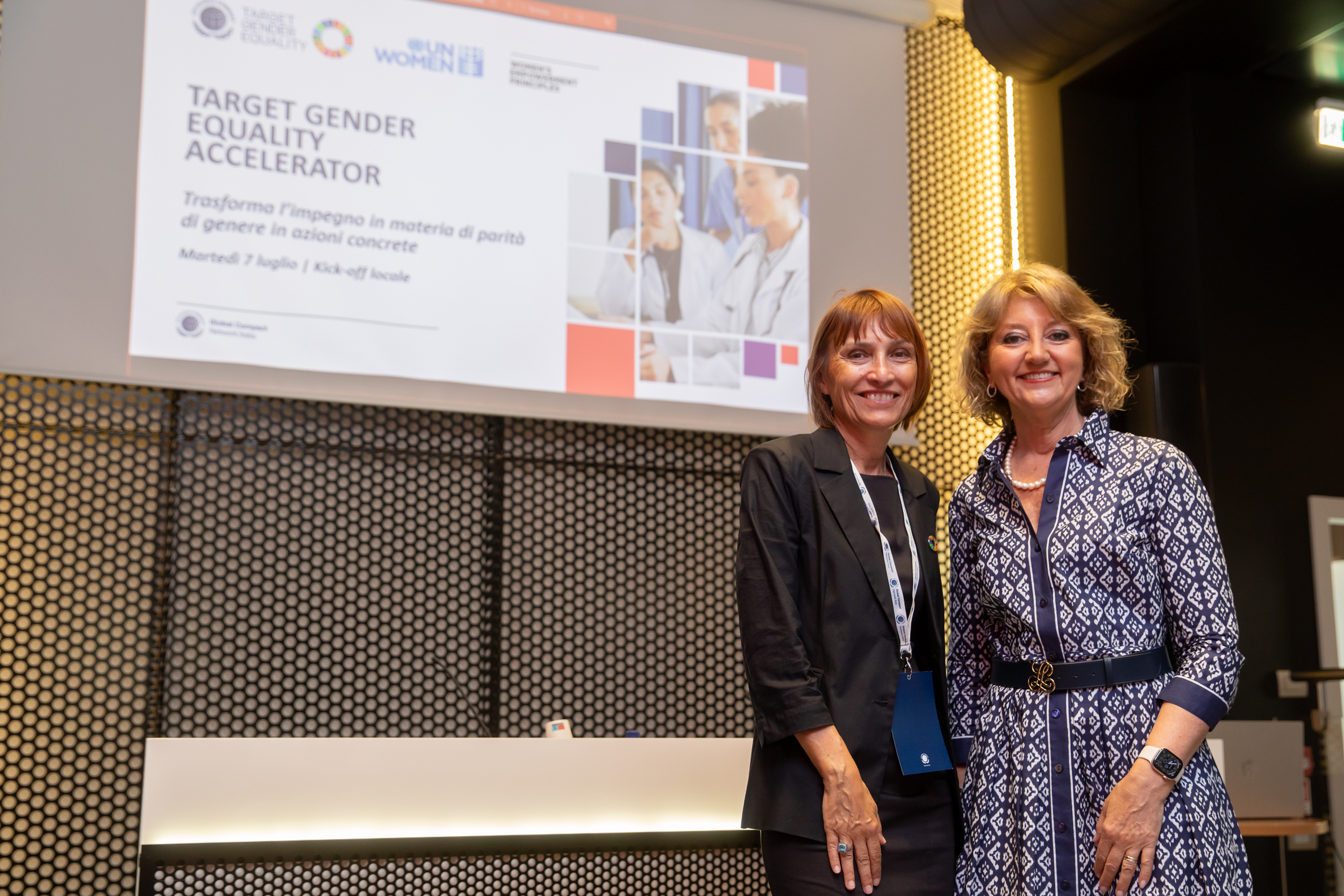
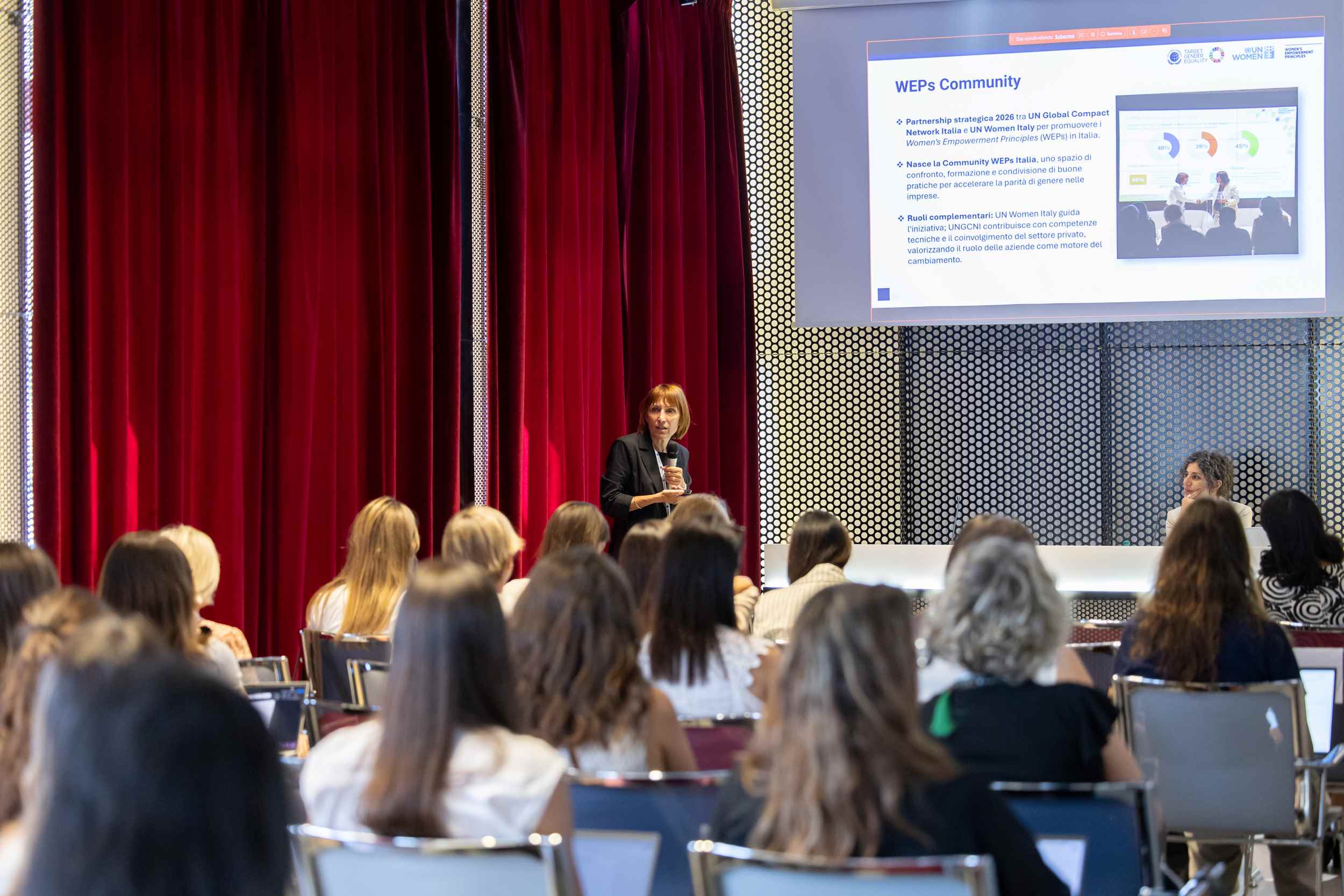
With the aim of accelerating progress toward gender equality and highlighting the private sector's pivotal role in addressing the gender gap, UNGCN Italy and UN Women Italy have strengthened their existing collaboration by launching a new strategic partnership to promote the Women’s Empowerment Principles (WEPs). The first in-person meeting of the Target Gender Equality Accelerator—organized by the Italian Network and held in Milan on Tuesday, July 7—served as the ideal opportunity to relaunch the initiative. It aims to develop and foster the new WEPs Italy Community: a space for dialogue, training, and the sharing of best practices among organizations that have already signed the WEPs.
WEPs and the role of the private sector in the challenge of achieving gender equality
The Women’s Empowerment Principles (WEPs) are an initiative launched in 2010 by the UN Global Compact and UN Women. They encourage the business community to actively implement seven principles—based on real-world corporate practices—to promote gender equality in the workplace.
The private sector plays a crucial role in this challenge. By integrating gender equality both internally—within their operations and supply chains—and externally through targeted community initiatives, companies not only fulfill a moral obligation by ensuring equal career and pay opportunities for all female employees, but also lay the groundwork for fair and inclusive work systems, ultimately boosting competitiveness and performance.
The WEPs can serve as a comprehensive framework for shaping internal strategies and policies, as well as for managing stakeholder relations. Globally, the WEPs have been endorsed by over 12,000 companies across more than 190 countries; in Italy, there are 182 signatory companies—a growing number, yet one that certainly has room to increase further.

Scenario data and the work of UN Global Compact Network Italy
According to the 2025 INPS Gender Report, the female employment rate in Italy stands at 53.3%, compared to 71.1% for men. This significant figure is compounded by another critical issue: women earn approximately 20% less than their male colleagues, and only 21.8% of executive roles in the private sector are held by women.
For this reason, it remains crucial to raise awareness on the issue and convey the message that women’s rights are human rights. To support companies on this journey, the UN Global Compact launched the Target Gender Equality Accelerator seven years ago—an intensive program designed to assist businesses in implementing the Women’s Empowerment Principles (WEPs) and to equip them with the knowledge and skills needed to achieve ambitious corporate gender equality goals, with a view to enhancing the impact of SDG 5.