
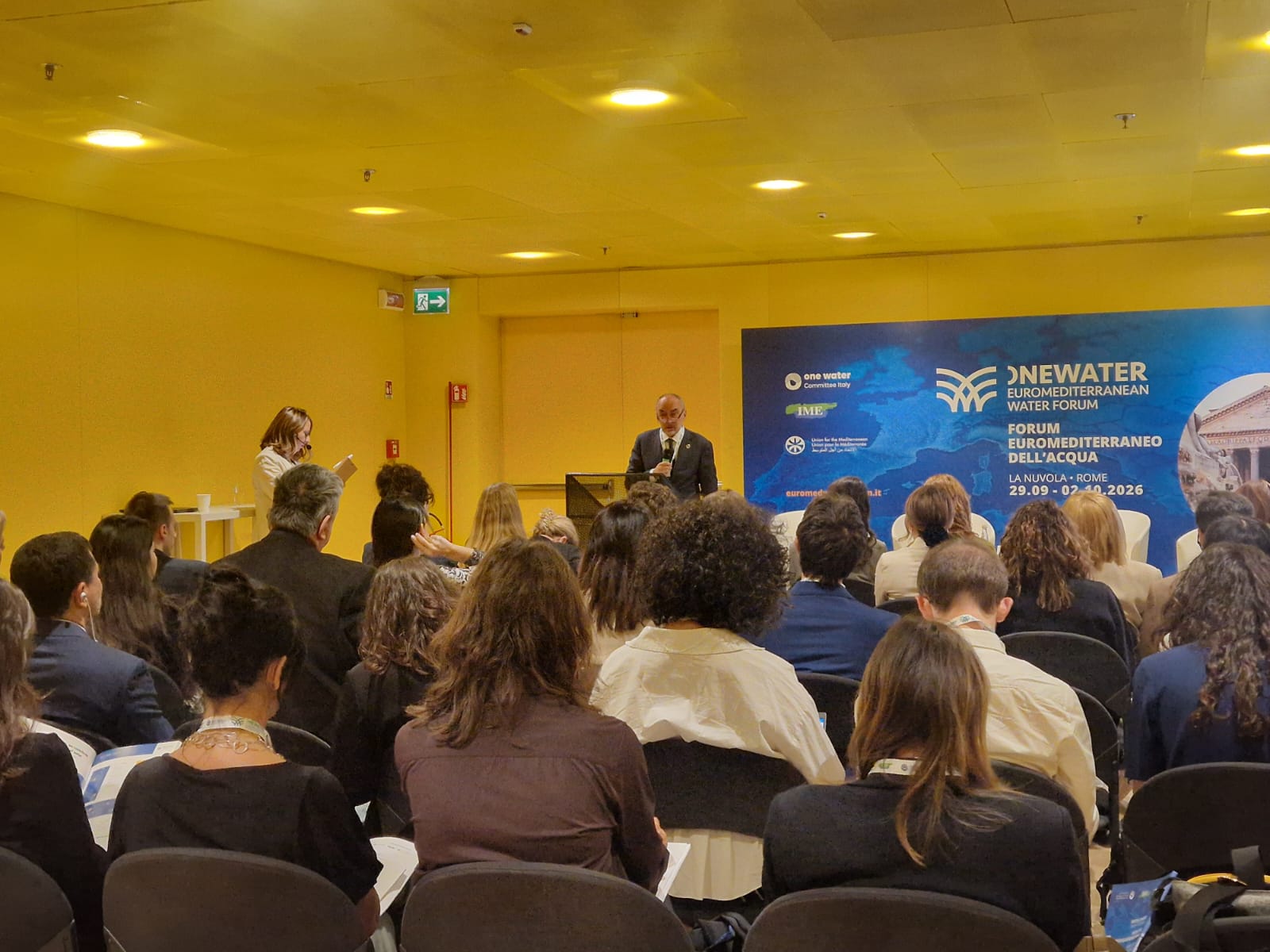
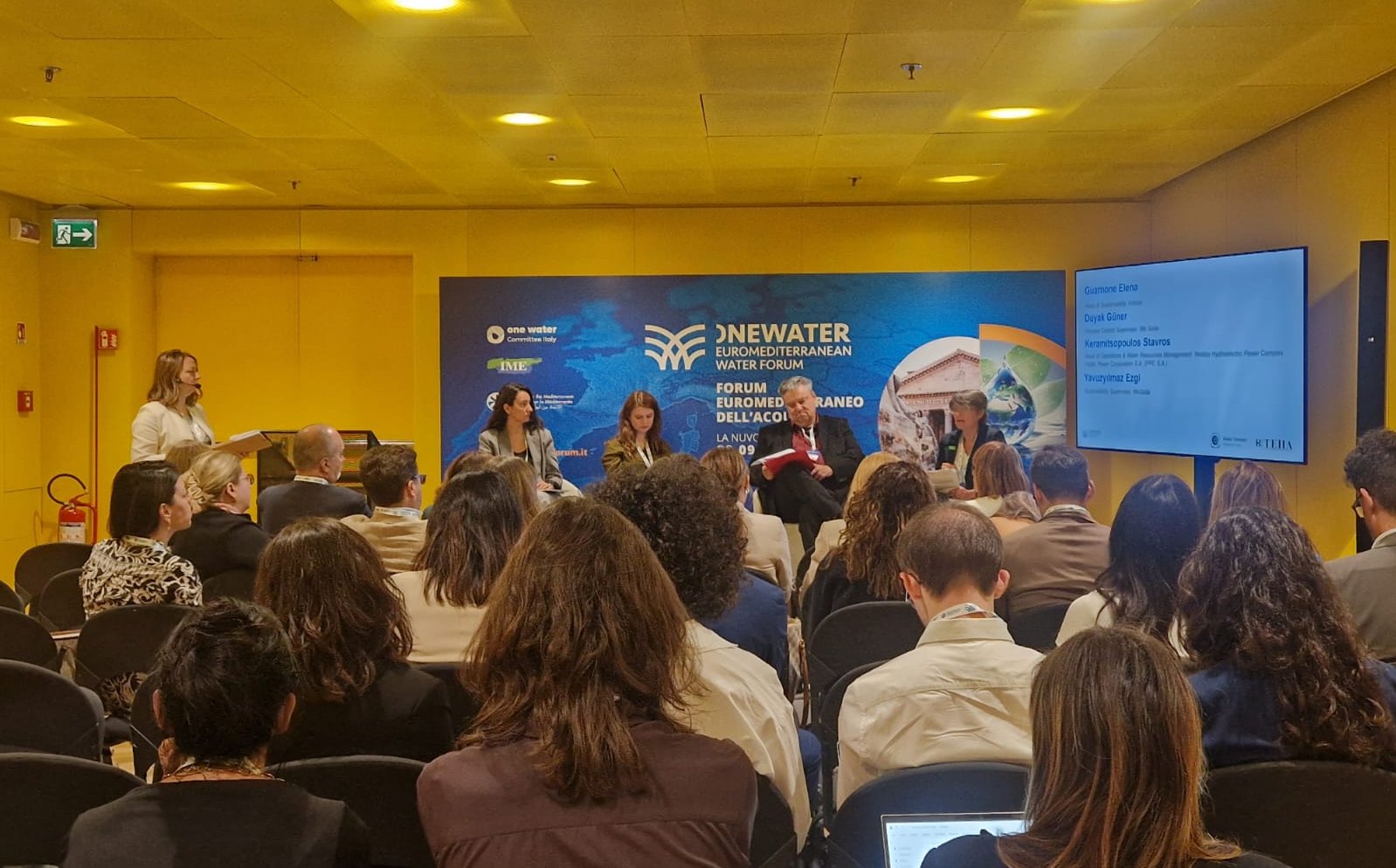
The growing pressure on water systems is transforming water into a crucial economic variable for the development, resilience, and sustainability of production systems in the Euro-Mediterranean region. This is the starting point for the research study “Building a Water Smart Economy in the Euro-Mediterranean Area: The Role of Business,” promoted by the UN Global Compact Network Italy in collaboration with The European House – Ambrosetti (TEHA) and the UN Global Compact Country Networks of Egypt, France, Greece, Portugal, and Turkey, with the support of Edison S.p.A. The study aims to analyze the role of businesses in the sustainable management of water and in building more resilient economies. The research was presented during the Euro-Mediterranean Water Forum, under the patronage of the Italian Ministry of Environment and Energy Security (MASE).
The Growing Impact of Water Scarcity on Economic Systems
In a context increasingly shaped by the effects of climate change, drought, and mounting pressure on water availability, water security has taken on a significance that extends well beyond the environmental sphere. Projections for 2050 estimate a 10% reduction in global GDP due to water scarcity—a figure that could reach as high as 19% in lower-middle-income countries.
The economic dimension of this crisis is particularly evident in Italy, where the economic cost of the water crisis reaches 13.4 billion euros per year—roughly double the European average and equivalent to 2.5 days of total economic standstill for the country. In Italy, an economic output of 384 billion euros—accounting for approximately one-fifth of the national value added—is dependent on water. These figures underscore how water management is increasingly linked to the continuity of productive activities, the resilience of value chains, and the overall competitiveness of economic systems.
Between Risk Exposure and Corporate Response Capacity
Within this context, research reveals a significant gap in Italy between exposure to water-related risk and the perception of its importance to business operations. While 56.4% of Italian companies operate in areas characterized by water stress, only 34% view water as a high or very high-level critical issue for the continuity of their business.
The governance landscape also shows room for improvement. Only 9.6% of Italian companies have a specific water management policy, and a mere 4.3% have set targets aligned with international frameworks. Involvement at the executive level is even more limited: only 8.5% of companies have top management oversee their water policies.
Governance, Investment, and Innovation for a Water Smart Economy
A shift from predominantly operational management to a strategic approach is therefore essential. There is also significant untapped potential regarding investment and innovation: 31.8% of companies allocate less than 5% of their total innovation-related investments to water, while only 15.9% view innovation in the water sector as a strategic priority.
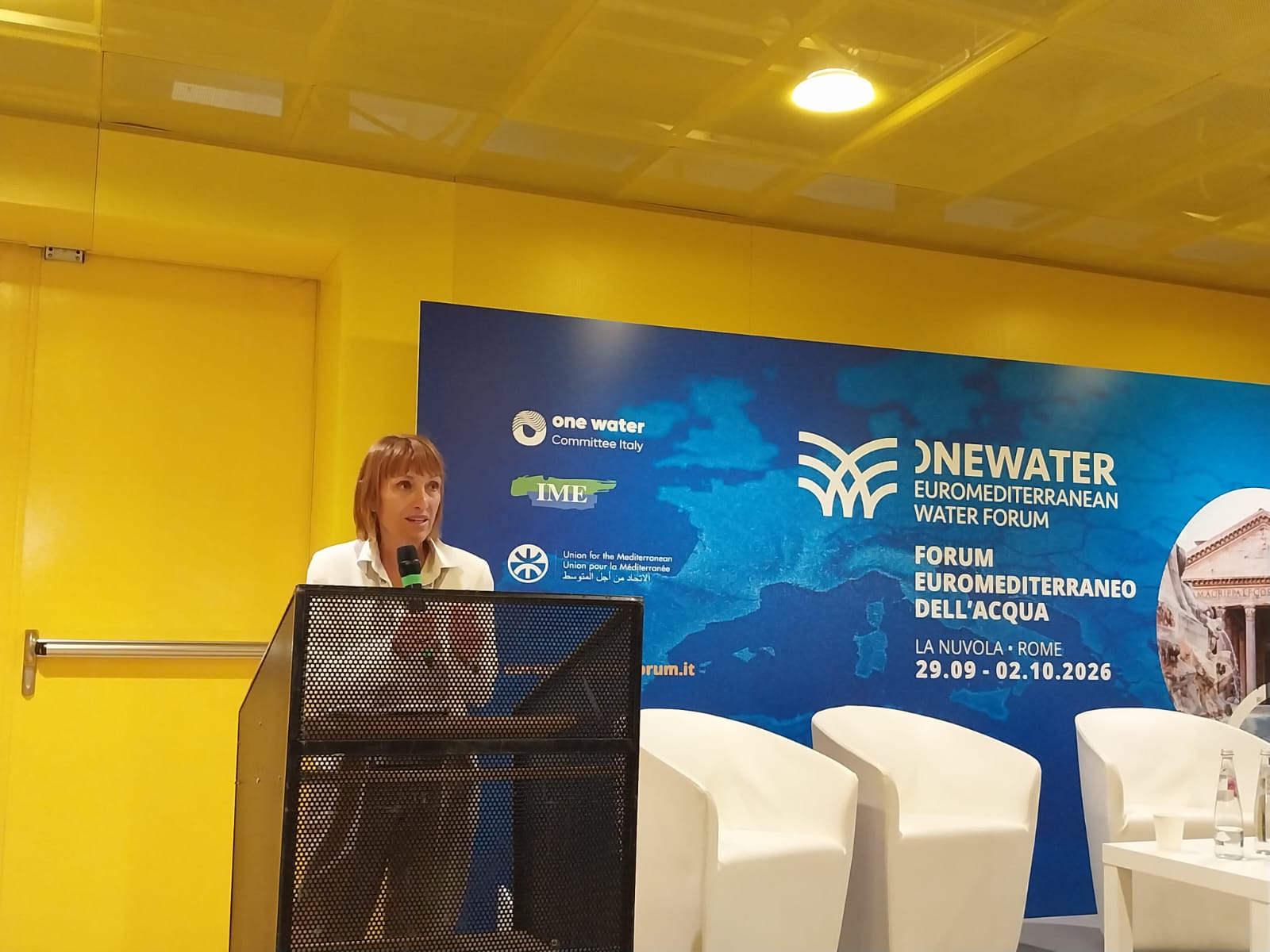
“We must move from operational management of water resources to a strategic approach, integrating water risk into the economic planning and investment decisions of Italian companies. The business case is clear: the ratio of mitigation costs to financial risk is 1:6,” emphasized Daniela Bernacchi, Executive Director of the UN Global Compact Network Italy.
The findings highlight the need to strengthen the capacity of businesses to understand, measure, and manage water-related risks by incorporating them into their strategies and investment decisions. This challenge is particularly significant in the Mediterranean region, where variations across territories, economic sectors, and levels of exposure necessitate collaborative responses and cooperation between nations. Furthermore, the involvement of Global Compact Networks from Egypt, France, Greece, Portugal, and Turkey has facilitated an exchange of diverse perspectives and contexts, fostering dialogue between businesses and stakeholders. This has helped shape a shared vision for a Euro-Mediterranean “Water Smart Economy”—one that is more resilient, sustainable, and competitive.
» Download the full document HERE.