
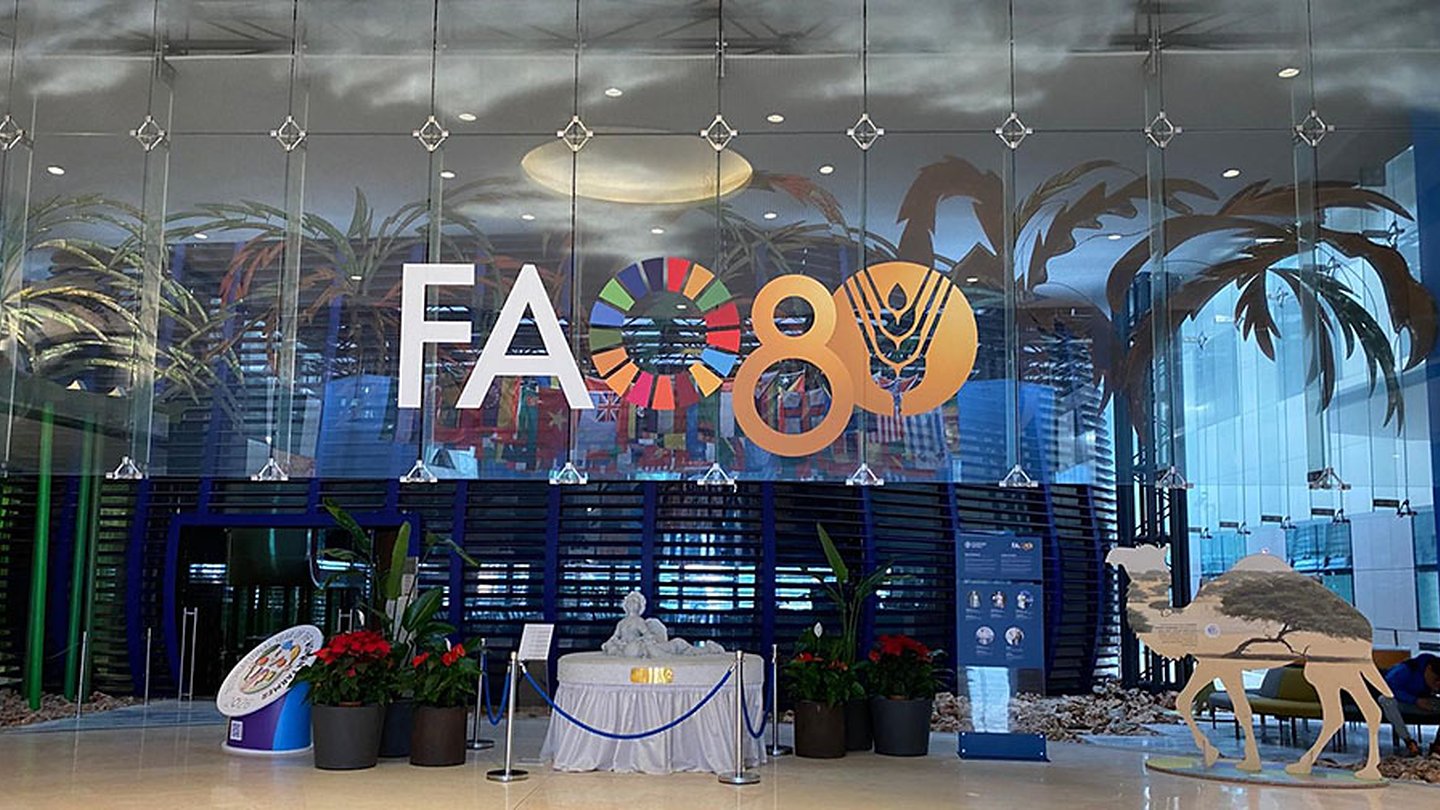
As part of the World Food Forum organized by the FAO, Daniela Bernacchi, Executive Director of UNGCN Italy, participated in a panel at the Hand-in-Hand Initiative Investment Forum—an initiative launched by the FAO in 2019 to accelerate the transformation of agrifood systems.
The World Food Forum (WFF) is the premier international event dedicated to the challenges surrounding sustainable agrifood systems. It brings together Heads of State and Government, representatives from European institutions, international organizations, the research community, and young leaders from across the globe.
Throughout the event, strategic topics such as food security, innovation, climate change, and the transformation of agrifood systems are explored in depth, with the goal of fostering shared solutions for sustainable and inclusive development.
What is the Hand-in-Hand Initiative Investment Forum?
During the 2026 HIH Investment Forum, currently taking place at the FAO headquarters in Rome, investment plans for the agri-food sector were presented by 37 countries participating in the initiative, alongside five regional initiatives.
These plans were developed as part of the FAO’s "Hand-in-Hand Initiative," which utilizes geospatial modeling, market analysis, and a partnership-based approach to transform agrifood systems—with the ultimate goal of helping to eradicate poverty, end hunger and malnutrition, and reduce inequalities.
UN Global Compact Network Italia’s Contribution to the Debate
Daniela Bernacchi, Executive Director of UNGCNI, presented the Italian Network’s perspective during the panel titled “Catalytic investments for resilient agrifood systems: Innovative partnerships for a changing world.” The discussion focused on how innovative, catalytic financial solutions can unlock the transformative potential of agrifood systems by targeting key leverage points capable of generating positive spillover effects for economies and communities.
Through its ongoing daily engagement with businesses, the Network has identified a core challenge: bridging the gap between long-term sustainability goals and investment decisions, which are often still driven by shorter-term horizons and returns.
The discussion underscored the importance of building resilience within agrifood systems to reduce structural dependencies, mitigate the impacts of extreme weather events, and strengthen systemic stability. In this context, investments in agrifood systems are framed not merely as a development priority, but as a strategic component for ensuring food security—as part of a broader strategy for resilience and security in today’s landscape of polycrisis.
Read also: