
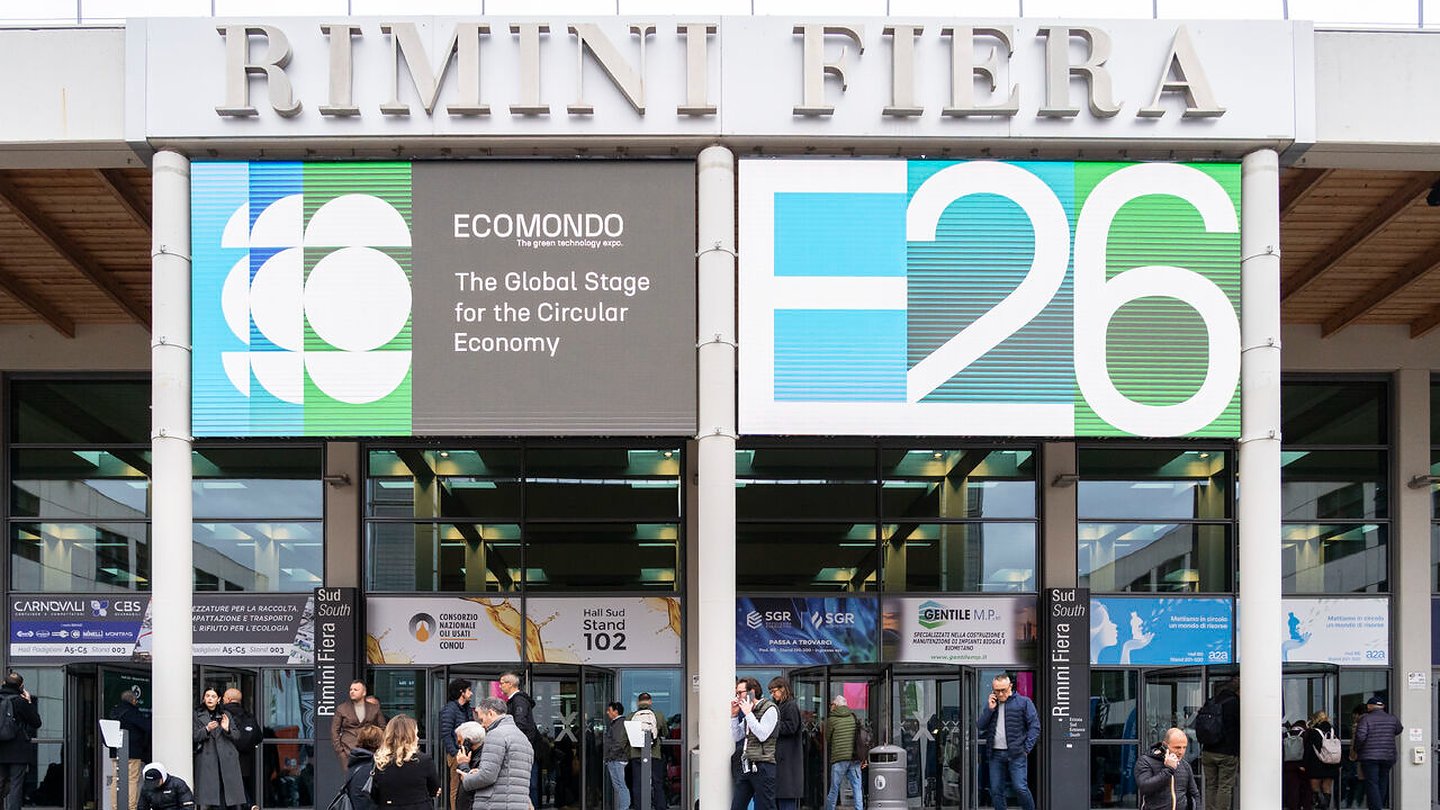
Once again, the Italian Network of the UN Global Compact participated in Ecomondo—the leading international event for the circular economy and ecological transition, held in Rimini—by hosting two sessions dedicated to the role of businesses in addressing key environmental sustainability challenges.
The Italian Network’s presence follows its recent appointment as a member of the event’s Technical-Scientific Committee and aligns with a broader international dialogue on the strategies and tools required to accelerate the transition toward more sustainable economic and production models.
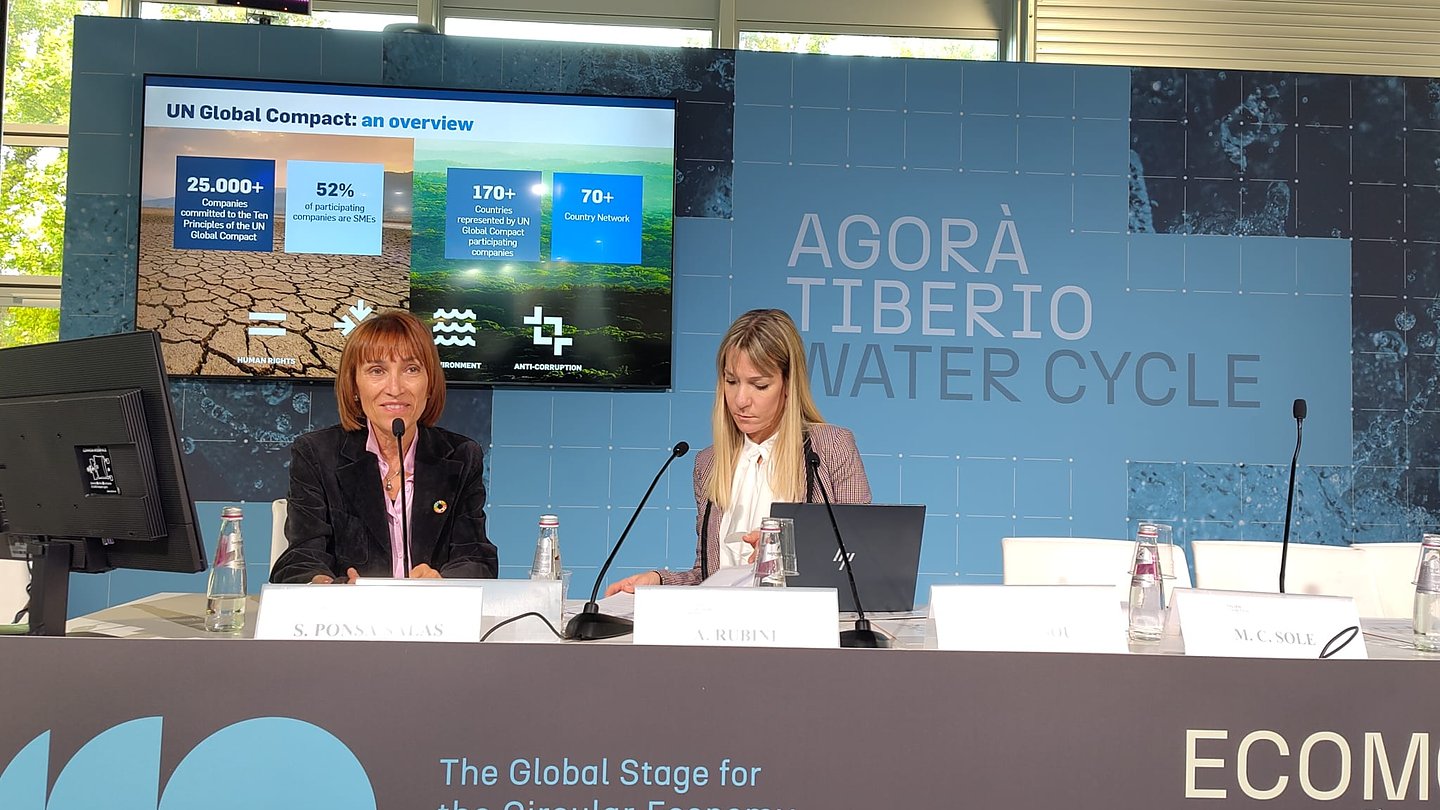
Water Resilience and Euro-Mediterranean Cooperation: The Contribution of UNGCNI Research
The first session in which the Network participated—represented by its Executive Director, Daniela Bernacchi—was the Opening High-Level Panel of the event "Water Resilience In and Beyond Europe: Euro-Mediterranean Cooperation, Innovation and Global Leadership."
On this occasion, Bernacchi presented the latest research from the Italian Network, produced in collaboration with The European House – Ambrosetti (TEHA), titled "Building a Water Smart Economy in the Euro-Mediterranean Area: The Role of Business". The study examines the strategic role of the private sector in building an economy that is more attentive to water resource management in the Euro-Mediterranean region. It highlights how businesses contribute to accelerating innovation, promoting sustainable water management models, and strengthening the resilience of economic and production systems—an issue of growing importance given the increasing pressures on water resources and the impacts of climate change.
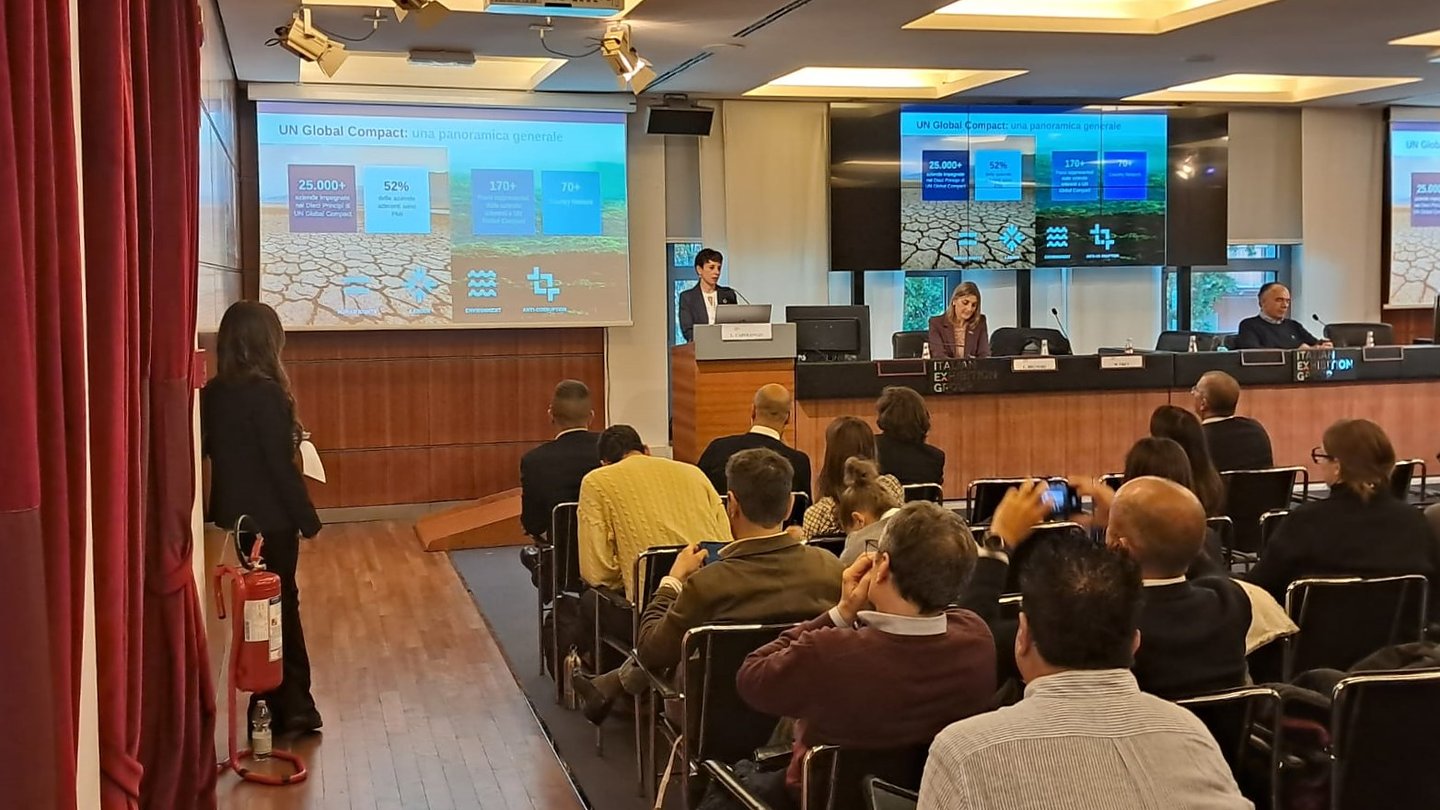
Decarbonizing Businesses: Strategic Planning and Measurement Tools
The Network’s second contribution focused on pathways for decarbonizing the production sector. During the workshop titled "Strategic Planning and Measurement in Corporate Decarbonization Pathways through Innovative Tools," Laura Capolongo, Senior Programme Manager at the UN Global Compact Network Italy, shared the UN Global Compact’s approach to the "twin transition." She explored the interconnection between digital transformation and the ecological transition, as well as the role of measurement and planning tools in helping companies integrate climate goals into their business strategies.
Participation in Ecomondo serves as another opportunity for the UN Global Compact Network Italy to foster dialogue and knowledge-sharing among economic stakeholders, guiding companies as they define concrete, measurable strategies to contribute to the achievement of the 2030 Agenda’s Sustainable Development Goals.