ANNUAL LETTER

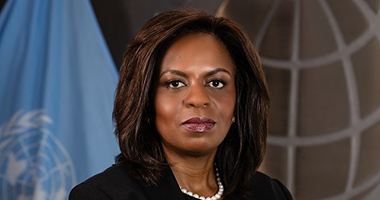
  • 2026 Annual Letter to UN Global Compact Participants from Sanda Ojiambo

    Dear Participants of the UN Global Compact,

    as we begin 2026, one truth stands out: in a world of heightened scrutiny and shifting expectations, responsible business is resilient business. Sustainability fuels innovation, strengthens risk management and reinforces investor confidence, demonstrating that corporate commitments are not soft promises but durable drivers of long-term value. When companies stay the course through political cycles, economic turbulence and public pressure, they provide the continuity that underpins trust, stable societies and well-functioning markets.

    The choices made in the near term will determine whether the world moves toward shared prosperity, a stable climate and an economy that works for all. At a moment defined by geopolitical tension, economic uncertainty and eroding public trust, principled business leadership is no longer optional; it is an essential stabilizing force.

    2025 carried particular significance. The United Nations marked its 80th anniversary, and the UN Global Compact marked 25 years since its founding. Together, these milestones reaffirmed our core mission: mobilizing the private sector behind universal principles and grounding long-term economic progress in values that endure, even as conditions change.

  • Annual Letter from the UN Global Compact: 20 Years of Uniting Business for a Better World

    Dear UN Global Compact Participant,

    Welcome to the Decade of Action: As we enter into 2020, allow me to share with you some reflections about my fears, hopes and great expectations for an important year — at the threshold of a critically important new decade that UN Secretary-General António Guterres has named the “Decade of Action".

    I fear that we are running out of time: At the startline for the Decade of Action, the world is falling badly behind in the race to avert the climate crisis. 2019 was the hottest year on record, concluding the hottest decade on record. And the trend is set to continue. In November 2019, 11,000 climate scientists sounded the alarm, saying the Earth is “clearly and unequivocally” facing a climate emergency and warning that we are running out of time to reverse the trend. 

    We are all impacted by climate change. Heatwaves, wildfires, storms, droughts, floods and rising sea levels are threatening the livelihoods and safety of billions of people. For some, survival relies on global leadership and action NOW. In May 2019, the UN Secretary-General visited Tuvalu, a country that, together with other island countries in the Pacific Ocean, faces sea-level rise four times greater than the global average. And yet, despite hard scientific data and living proof, we all left disappointed from COP 25 in Madrid and its urgent call to Governments to transition away from dependence on fossil fuels. In fact, rather than falling, CO2 emissions continue to rise.

  • Annual Letter from the UN Global Compact: 20 Years of Uniting Business for a Better World

    Dear UN Global Compact Participant,

    Welcome to the Decade of Action: As we enter into 2020, allow me to share with you some reflections about my fears, hopes and great expectations for an important year — at the threshold of a critically important new decade that UN Secretary-General António Guterres has named the “Decade of Action.

    I fear that we are running out of time: At the startline for the Decade of Action, the world is falling badly behind in the race to avert the climate crisis. 2019 was the hottest year on record, concluding the hottest decade on record. And the trend is set to continue. In November 2019, 11,000 climate scientists sounded the alarm, saying the Earth is “clearly and unequivocally” facing a climate emergency and warning that we are running out of time to reverse the trend. 

    We are all impacted by climate change. Heatwaves, wildfires, storms, droughts, floods and rising sea levels are threatening the livelihoods and safety of billions of people. For some, survival relies on global leadership and action NOW. In May 2019, the UN Secretary-General visited Tuvalu, a country that, together with other island countries in the Pacific Ocean, faces sea-level rise four times greater than the global average. And yet, despite hard scientific data and living proof, we all left disappointed from COP 25 in Madrid and its urgent call to Governments to transition away from dependence on fossil fuels. In fact, rather than falling, CO2 emissions continue to rise.